


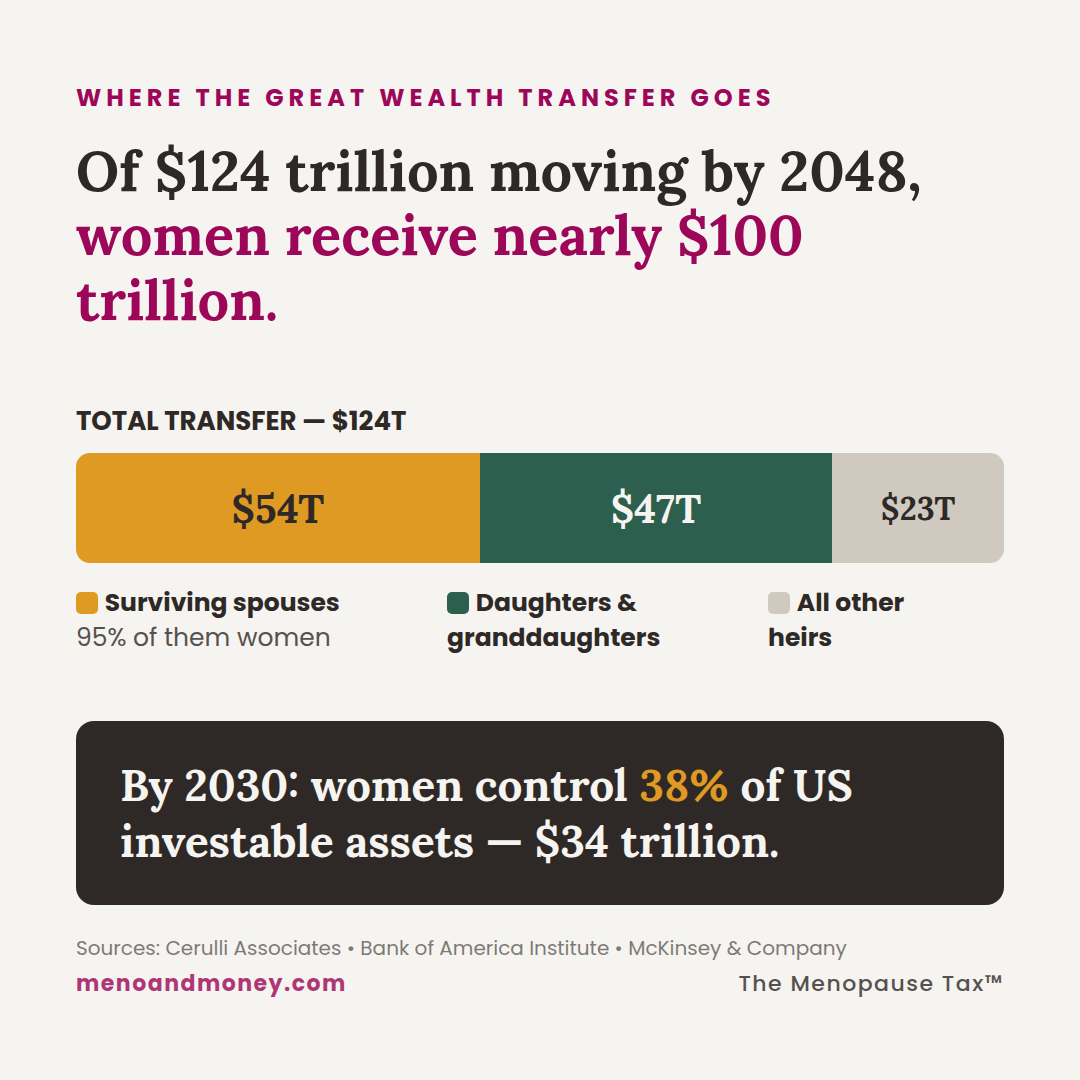
Nearly $100 trillion is about to land in women’s hands. And most of it will arrive during the menopause transition.
The numbers:
$124 trillion is moving between generations through 2048 (Cerulli Associates, via CNBC)
$54 trillion goes to surviving spouses — and 95% of them are women (Bank of America Institute)
$47 trillion passes to daughters and granddaughters (Bank of America Institute)
By 2030, women will control $34 trillion — 38% of US investable assets, nearly double our 2023 share (McKinsey, via CNBC)
The industry calls this a windfall. I call it a stress test.
THE MONEY AND THE MENOPAUSE TRANSITION RUN ON THE SAME CALENDAR
Your biology was never consulted
The transfer happens in two phases. Both land inside the menopause window.
Phase 1: The $47 trillion parent-to-daughter wave hits women in their 40s and early 50s. Peak perimenopause. Sleep disruption and estrogen swings hitting the exact brain regions you use for complex decisions.
Phase 2: The $54 trillion spousal wave lands in the late 50s and 60s. Postmenopausal, newly widowed, grieving — and facing the largest financial decisions of your life.
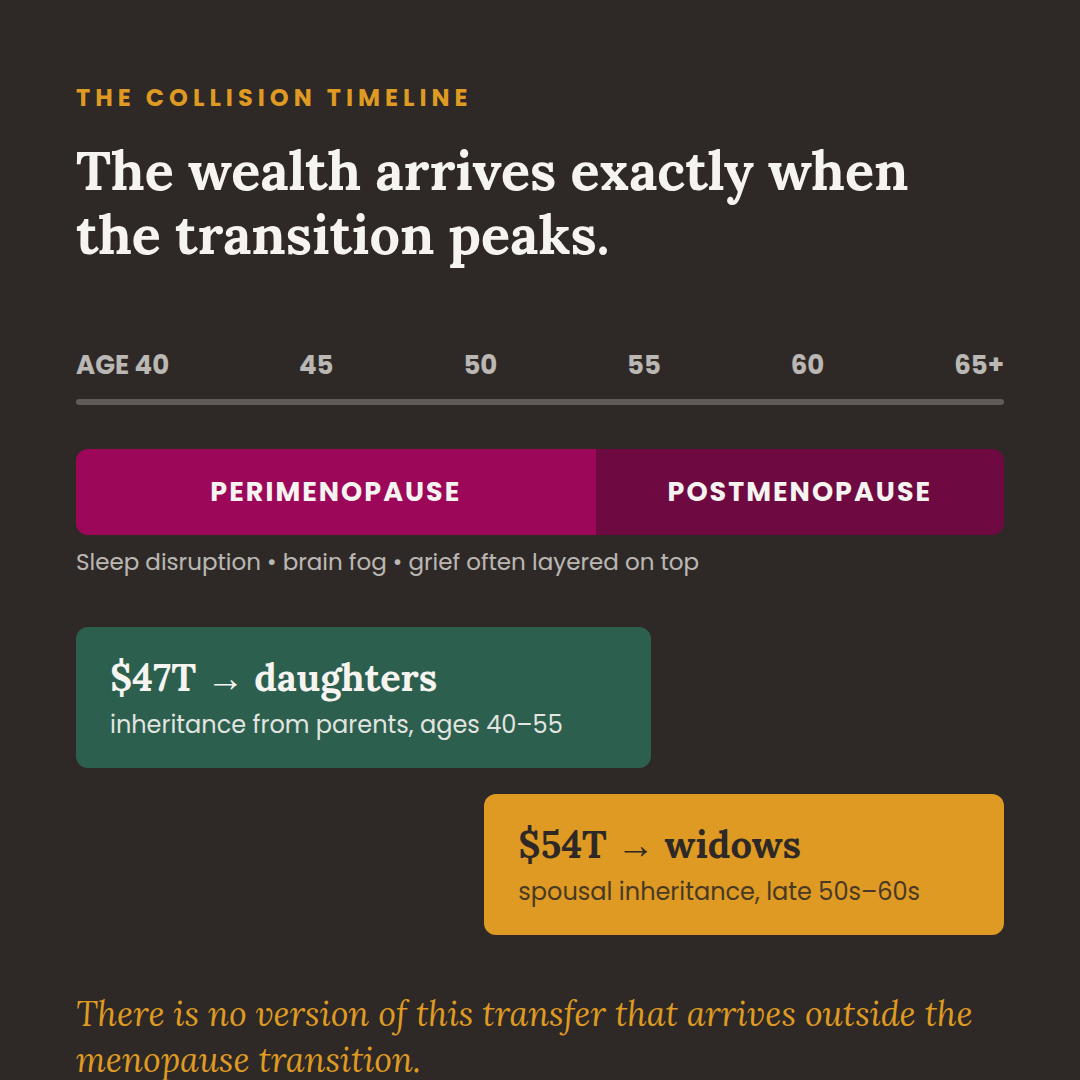
There is no version of this transfer that arrives outside the menopause transition.
A 54-year-old operations executive inherits $380,000 from her mother the same year her sleep collapses. Ninety days of decisions: retitle accounts, evaluate her mother’s advisor, decide what to sell and what to shelter. She’s running on four hours of sleep. Nobody at the advisory firm asks. I see versions of her constantly.
UNPREPARED IS THE EXPENSIVE PART
This is the Menopause Tax™ third pillar: Compounding Costs
Only 27% of Americans have discussed wealth transfer with their families, and 35% never plan to (Edward Jones) — 38% among US women (World Economic Forum). Meanwhile, 41% of Boomers and 45% of Gen Xers have no will or basic estate documents (LegalShield).
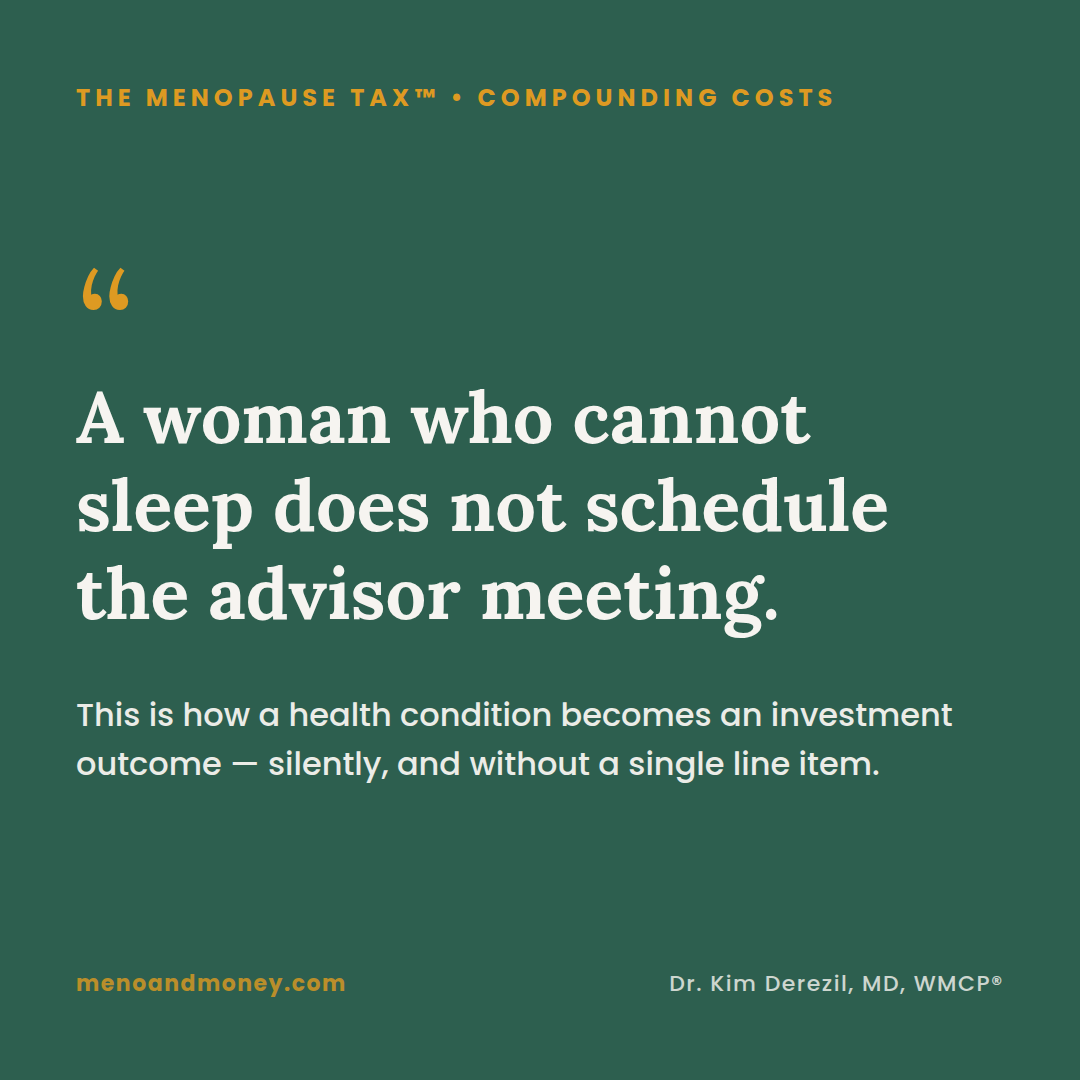
The event isn’t what costs you. The structure you inherit into is. An inheritance parked in cash for two foggy, exhausted years doesn’t cost two years of returns — it costs their compounded value across three decades. Symptoms drive the delay: a woman who cannot sleep does not schedule the advisor meeting.
And grieving, symptomatic, newly moneyed women are the industry’s softest target — for rushed annuity swaps and “just sign here” transfers. Not because anyone thinks you’re incapable. Because everyone assumes you’ll defer.
THE PREPARED INHERITOR STRATEGY
Build the system before the money arrives
Move 1: Force the family conversation this year. Three questions: What exists, where is it held, who is named on it? You’re asking for the map, not the money. Start with beneficiary designations — they override wills.
Move 2: Close your own estate gap first. Will, financial power of attorney, healthcare directive, updated beneficiaries. You’ll also learn the vocabulary before you need it mid-grief.
Move 3: Treat your menopause as financial protection. Care isn’t a comfort expense. It protects the operating system every wealth decision runs on. A woman who is sleeping reads the document, questions the fee, and says no. The clinician protects the decisions; the advisor executes them.
THE QUESTION IS THE CONDITION YOU’RE IN WHEN IT ARRIVES
Thirty-eight percent of US investable assets is leverage — with advisors, employers, and a healthcare system that ignored menopause for decades. But leverage only counts if the woman holding it is treated, rested, and prepared.
The industry is preparing for your money. Are you?
If a transfer is on your horizon, this belongs in a 1:1. Book the Meno & Money Strategy Session at menoandmoney.com.