


Midlife is when your care changes. Hormone therapy, bone density scans, sleep care, and mental health visits all start showing up on your claims. I see women choose by premium alone every fall, and the surprise arrives with the first pharmacy bill. Here are the five things to check first.

1. YOUR DRUG LIST CHANGES EVERY JANUARY
Look up your hormone therapy before you enroll
The formulary is your plan’s list of covered drugs. Search your hormone therapy by name, including patches, micronized progesterone, and vaginal estrogen. Search next year’s list, since last year’s list no longer applies.
If your drug moved to a higher tier or needs prior authorization, meaning the plan must approve it first, ask your prescriber to start that paperwork now. For a stable prescription, also ask about 90-day mail order. It often costs less than 30-day fills at the pharmacy.
2. TOTAL COST DECIDES THE PLAN
The premium is only one line of the math
Add up the premium, the deductible, and what you spent last year on visits and prescriptions. Compare plans on that total. Your claims history from last year is the best guide you have, so pull it up tonight.
3. YOUR DOCTORS MUST BE IN NETWORK
Check each one by name
Menopause-trained clinicians are often out of network or cash-pay. Look up every doctor you see, and ask whether telehealth visits are covered. To find a certified menopause practitioner, use the Menopause Society directory.
Then ask how your mammogram or bone density scan will be coded. Coded as screening, it is usually covered at no cost. Coded as diagnostic, a bill can follow. HealthCare.gov lists bone density screening as a covered preventive service for women 64 and younger who have gone through menopause. See the full preventive care list for women. healthcare
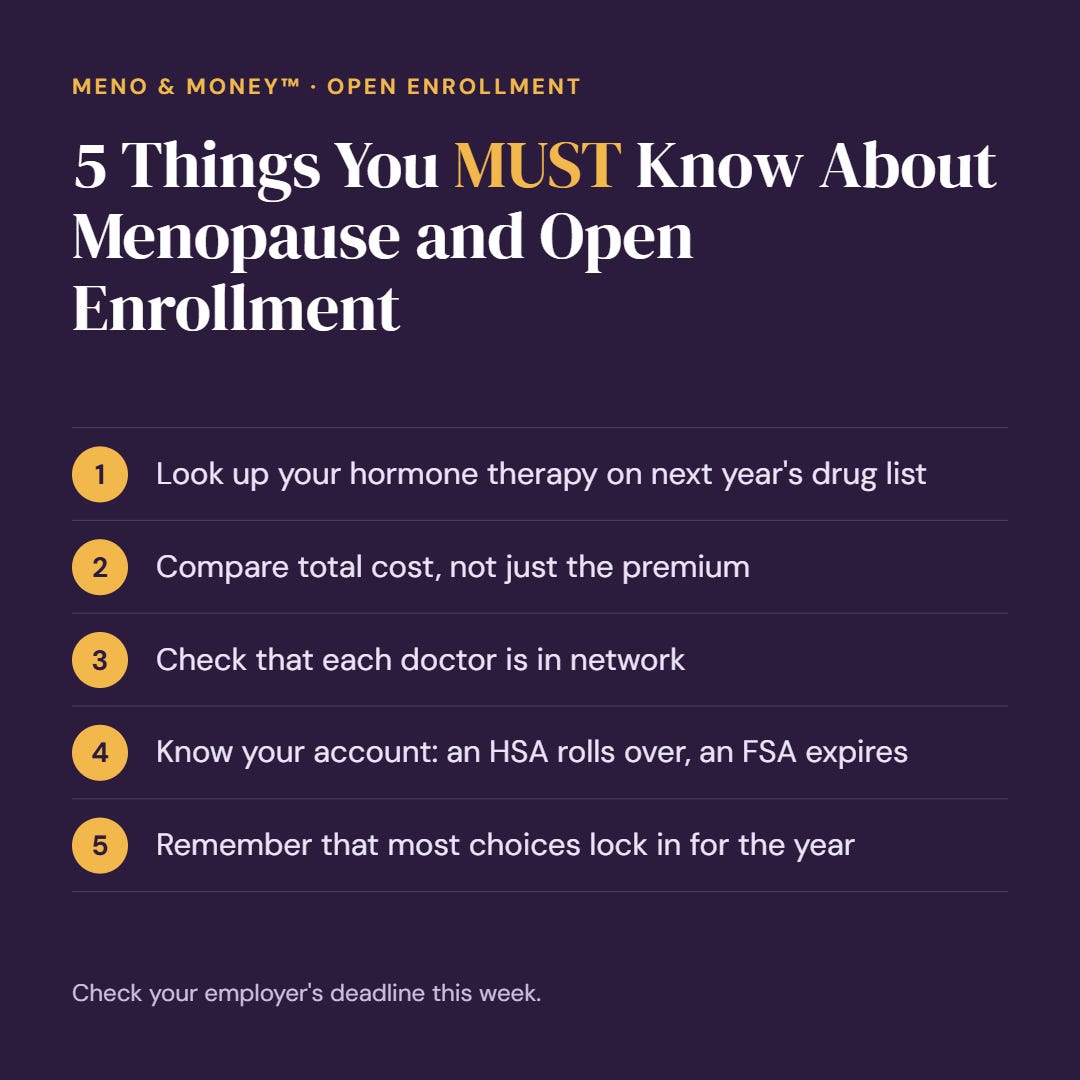
4. HSA AND FSA RULES ARE DIFFERENT
One rolls over and one expires
An HSA, or health savings account, rolls over and stays yours. An FSA, or flexible spending account, is use-it-or-lose-it, so fund only what you can predict. A spouse’s general-purpose FSA can block you from contributing to an HSA. Ask about a limited-purpose FSA instead. The official rules are in IRS Publication 969.
5. MOST CHOICES LOCK IN FOR THE YEAR
Open enrollment is your window
Most changes are only allowed now, unless you have a life event like marriage or job loss. Disability and life insurance are also easiest to add at enrollment, with fewer health questions. Waiting can mean medical underwriting later.
While you are in the portal, look for the employee assistance program, telehealth, and any women’s health or menopause navigator. Employers pay for these, and few people use them. Update your beneficiaries too. It takes five minutes.
Employer deadlines vary, so check yours this week. Medicare runs through December 7, and you can compare plans on the Medicare Plan Finder. On HealthCare.gov, enroll by December 15 for coverage that starts January 1. Open enrollment ends January 15. Some state exchanges run later. healthcare
PICK THE PLAN ON PURPOSE
Then tell me what surprised you
What did your plan surprise you with last year? Hit reply and tell me.