


You’re reading Reddit at 2 a.m. because you can’t sleep anyway. Another woman describing eight years lost—60 pounds gained, panic attacks, work leave, marriage barely holding on—while doctors kept saying “just stress” and adding more antidepressants. You close your phone thinking: “What is happening to me?”
Here’s what I keep seeing: Menopause is the only medical transition we know is coming, can plan for, and somehow still walk into like we forgot there was a door.
What we’re told: If you’re smart and informed, you’ll handle it.
What actually happens: The system waits until you’re in pieces before anyone suggests hormone therapy. By then, you’ve already spent thousands trying to fix symptoms one at a time—therapy, antidepressants stacked on supplements, weight loss programs, couples counseling—while your career hangs in the balance.

I hear versions of this story constantly from women who’ve always been sharp: “I knew menopause was a thing. I just didn’t know it would cost me my job.” Or “I thought I’d get hot flashes and be done. I didn’t know I’d lose eight years.”
We can know it’s coming and still be blindsided—because knowing menopause exists is not the same as being protected from it.
And here’s what nobody talks about: that gap costs real money.
What ‘Predictable’ Actually Costs
When treatment gets delayed by years, you’re not just pushing through symptoms. You’re dealing with:
Lost income: Taking leave, cutting hours, or turning down projects because your brain won’t cooperate when you need it to
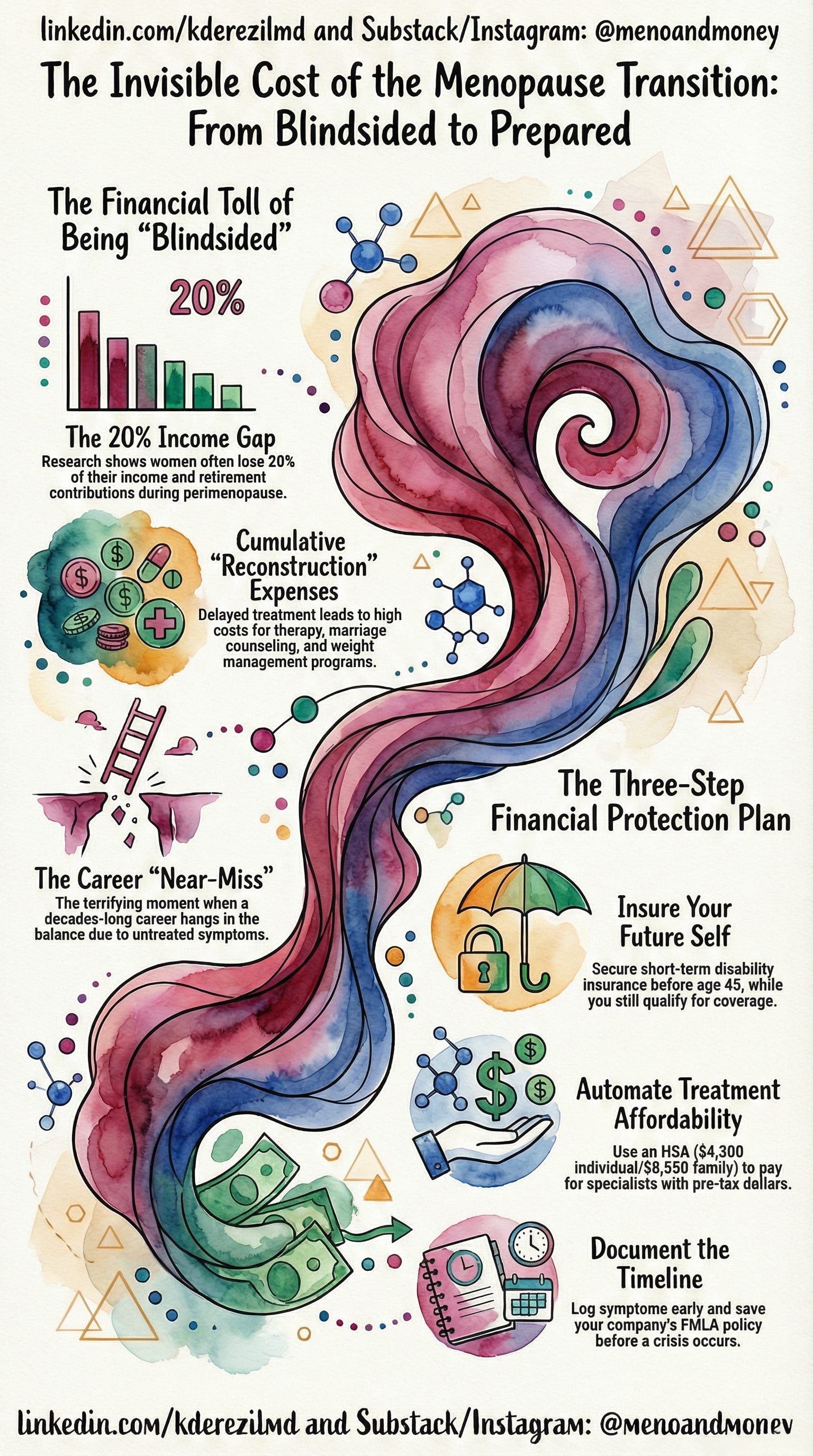
Reconstruction expenses: More therapy sessions, more medications, weight management programs, marriage counseling to repair what the untreated symptoms damaged
Retirement losses you can’t recover: Research shows women lose about 20% of their income during perimenopause—those aren’t just paychecks, they’re years of retirement contributions you’ll never get back
The near-miss: When you say “I’m lucky I’m still employed,” what you mean is you came terrifyingly close to losing everything you spent decades building
This isn’t about you being unprepared. It’s about a medical event we’ve known about forever being treated like a character flaw until it becomes a financial emergency.
Three Things to Do Before Symptoms Start
1. Protect the version of you who might need time off: Get short-term disability insurance before you hit your mid-40s. Once symptoms appear, you may not qualify. I know it feels like planning for failure. It’s not. It’s protecting your income if you need to step back.
2. Make treatment affordable on autopilot: Open an HSA and set up automatic contributions—$4,300 if you’re single, $8,550 for families in 2025. Hormone therapy, specialist visits, therapy—it adds up faster than you think. Pre-tax dollars mean you’re not choosing between treatment and groceries.
3. Document early, even when you feel fine: Save your company’s FMLA policy somewhere you can find it. Start a simple log of any symptoms—even just notes on your phone. If you need leave later, memory gaps will make it harder to piece together a timeline. Most women don’t think about this until crisis hits.
Menopause was always going to happen. What’s inexcusable is that we keep expecting women to navigate it without a map.
You don’t have to fix this tonight. But if you’re in your 40s feeling fine, or if you’re struggling and wondering why nobody warned you—this is your warning.
Reply with one word: “Prepared” or “Blindsided.”
And if someone you know keeps saying “I should have seen this coming”—send this to her. Because no, she shouldn’t have had to guess.