

A recent study published in Obstetrics & Gynecology looked at the financial impact of hormone therapy for hot flashes and night sweats across a woman’s lifetime. The results? Women who took the therapy came out $13,540 ahead and gained an average of 3.3 more quality-adjusted life years. That means not just more years, but better years—years you can actually enjoy.
I know this might sound surprising. Believe me, I was just as amazed.
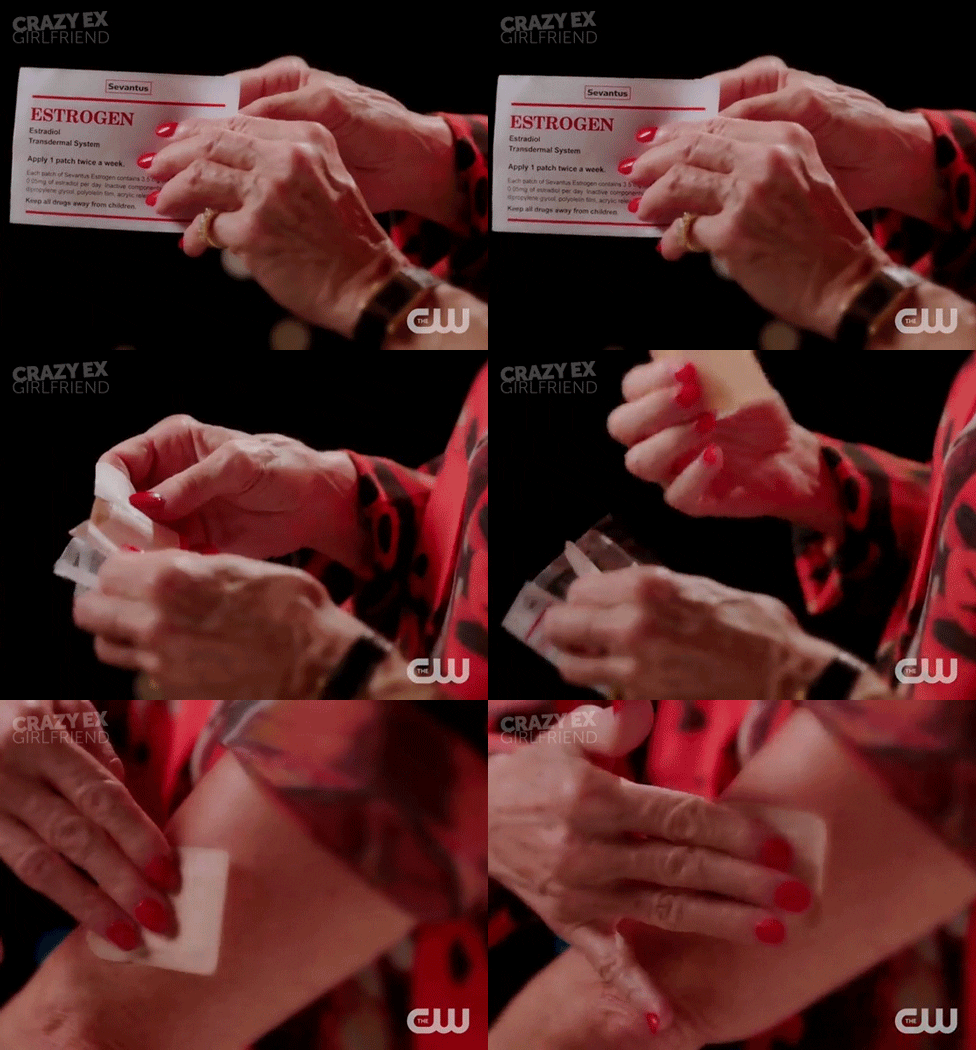
But here’s what I really want you to pay attention to, especially if you’re in your early 40s and your cycle has started to shift. Timing here is everything. The benefits appear when you start hormone therapy close to the transition—not years later. So if you’re in perimenopause, this isn’t something to put off. It’s something to think about right now.
Okay, so why does timing matter so much?
It turns out, the biggest reason women saved money wasn’t just relief from hot flashes. It was about protecting their hearts.

Estrogen seems to protect your heart, your blood vessels, and your cholesterol during exactly the years when all of that starts shifting. And that protection is strongest when you start near the transition. Wait too long, and you might just miss it.
Perimenopause isn’t just a waiting room. It’s the main event—the moment to take action.
The fear you’re carrying probably isn’t even yours
You know that instinct, the one that says maybe it’s not that serious, maybe it’s not worth bringing up again? I get it. That instinct is honestly older than some of our kids.
Back in 2002, a large study linked hormone therapy to certain risks, scaring a generation of women and their doctors. But here’s what isn’t always clear: that study looked at women with an average age of 63, many already a decade past menopause and dealing with other health issues. It wasn’t about women in their 40s, starting this transition now.
This newer research looks at women who are actually being prescribed hormone therapy today. And for them, the picture looks pretty different.
So if your clinician is still operating from that old 2002 mindset, you may need to be the one to bring the latest research to the conversation. It may not feel fair, but it’s reality—and I want you to feel empowered and prepared.
Now let’s talk about the actual numbers, no sugarcoating
Per 10,000 women who took estrogen alone instead of skipping treatment, the study found 259 fewer cases of heart disease, 181 fewer hip fractures, and 647 fewer deaths.
It also found 87 more cases of breast cancer. I’m not going to leave that out, because you deserve the whole picture, not just the flattering half.
Even counting that tradeoff, the treatment group still came out $13,540 ahead per woman, with more good years of health to show for it. Researchers actually have a term for that: “absolute dominance,” meaning cheaper AND more effective, both at once.

Here’s what I keep coming back to: Delaying this conversation isn’t a neutral choice. It’s a decision to skip the years when taking action is most effective—and least costly. I call it the Menopause Tax™. It’s not a single big bill, but a series of small costs that quietly add up during the years when you have the most power to make a difference.
So, what do I actually want you to do with this?
Your family history, your own risk, how bad your symptoms are, all of that still matters, and any good doctor will walk through it with you.
But please, don’t wait until you’re forced into the conversation. Bring this up at your next doctor’s appointment—while you’re still in perimenopause. Ask about your heart and bone health now, not years down the line.
That one question could be worth thousands of dollars. And a lot more good years with the people you love.
Source: Brown J, et al. Cost-effectiveness analysis of menopausal hormone therapy. Obstetrics & Gynecology, 2026.