


On August 7, 2026, Governor JB Pritzker signed 3 menopause-focused bills into law.
The main bill is HB 5284, called the Illinois Menopause Equity and Care Act. Two related bills passed with it. Together, these three laws touch different parts of a woman’s life: her job, her insurance, and the training her healthcare providers receive.

WHAT EACH LAW DOES
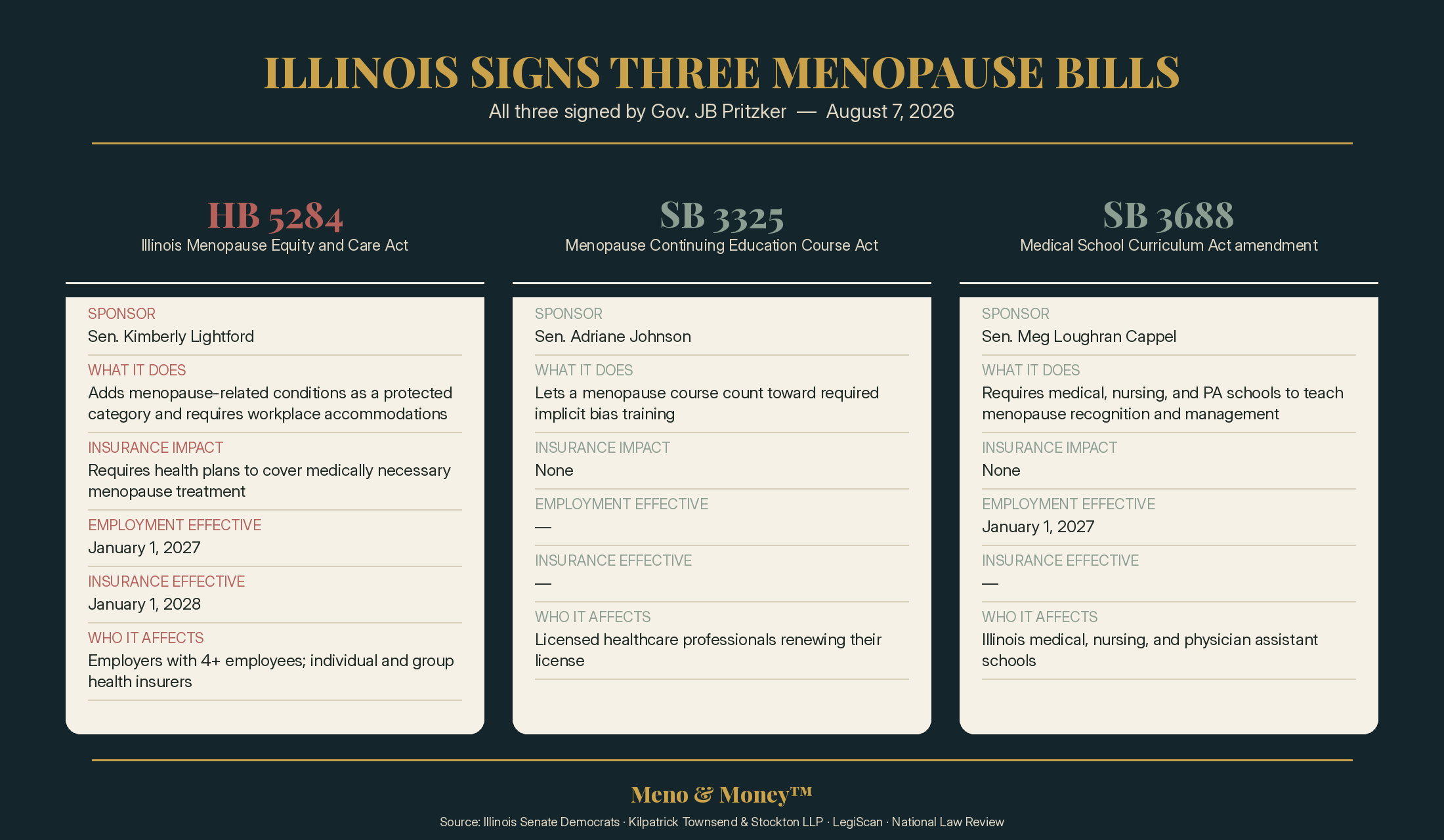
HB 5284 is the most significant of the three. Starting January 1, 2027, it adds menopause-related conditions—like hot flashes, night sweats, sleep problems, brain fog, and bone loss—as a protected category under Illinois’ human rights law. Employers with four or more workers must now provide reasonable accommodations, such as flexible schedules, cooler workspaces, or remote work when needed. Another important change: starting January 1, 2028, health insurance plans in Illinois, both individual and group, must cover medically necessary care for perimenopause and menopause. This gives women financial protection, written directly into insurance law.
SB 3325 is a smaller bill, but it’s still important. Illinois already requires healthcare professionals to complete 1 hour of implicit bias training each renewal period. Starting January 1, 2027, a course on perimenopause and menopause can count toward that hour. This is an incentive, not a new rule, and Illinois is the first state to offer it this way.
SB 3688 addresses the issue even earlier. It updates the Medical School Curriculum Act so Illinois medical schools must teach menopause recognition and management. The same requirements now apply to nursing and physician assistant programs. This law is designed for the doctors who will care for future generations.
WHY THIS ADDS UP TO SOMETHING BIGGER
Consider how these laws work together. Future doctors will be trained. Current doctors have an incentive to learn more. Once a woman is diagnosed, her insurance must cover treatment, and her employer must provide support. These three bills cover the entire process, from medical school to the exam room to the insurance claim.
I created the Menopause Tax™ framework because many of the losses women face during this transition—like lost income, career setbacks, and extra expenses—often go unnoticed and unnamed. Illinois has now officially recognized this in law. When the insurance mandate takes effect in 2028, it could significantly reduce out-of-pocket costs for women. This is the Menopause Tax™ being addressed in legislation, not just in conversation.
WHAT THIS MEANS IF YOU DON’T LIVE IN ILLINOIS
Rhode Island passed a similar law in 2025, and states from New York to California have introduced their own versions this year. Illinois is part of a larger trend, and changes like this often spread from state to state until they become standard.
If you run a company, pay attention to these changes, no matter where your business is based. Laws like this often become the new standard quickly. And if you are a woman experiencing this transition, it’s important to know that the conversations in your doctor’s office and HR department are now being shaped by real laws, not just good intentions.
Sources: Illinois Senate Democrats, Kilpatrick Townsend & Stockton LLP, LegiScan, and the National Law Review.
What Illinois passed has been so exciting to watch. I hope this incentives other states to take similar actions