


You’ve given decades to your students. You’ve shown up exhausted, overheated, and foggy — and you still showed up. But here’s what no one in your district will tell you: untreated menopause symptoms aren’t just making your days harder. They’re quietly shrinking your pension.
Inside this issue:
Why the teaching profession is ground zero for untreated menopause
How symptoms affect the exact career years that determine your retirement
3 money moves to protect what you’ve earned
The Classroom Has No “Step Away” Button
Think about what teaching actually demands: uninterrupted performance in front of 30 people, six hours a day, on a fixed schedule, in a room you don’t control.
Now layer on perimenopause.

Hot flashes don’t wait for prep period. Brain fog hits mid-lesson. Poor sleep shows up Monday morning when you’re supposed to be sharp. I hear this constantly from women in education — capable, experienced professionals who are white-knuckling through their peak earning years because the word “menopause” has never once been said out loud in a faculty meeting.
Teaching is a female-dominated profession, and the average teacher is right in the thick of the perimenopause transition. Most school leaders — female principals, department chairs, veteran teachers — are going through this too. And the institutional support? Essentially zero.
Here’s the thing about workplace stress and menopause: they make each other worse. High-demand environments amplify symptoms. Worsened symptoms reduce performance. And a profession with chronic understaffing, no flexibility, and sky-high emotional labor is about as high-demand as it gets.
Here’s Where It Becomes a Retirement Crisis
Teacher pensions are calculated on a formula: years of service multiplied by final salary. That calculation is built on the last several years of your career — the exact years when menopause symptoms peak.
🔥 Career costs teachers absorb in silence:
Avoiding promotion because leadership feels unmanageable right now
Dropping from full-time to part-time to survive the symptoms
Taking more sick days, which quietly flags you to administration
Stepping back from visible roles that would have boosted your salary — and your pension

Every year of reduced earnings in this window doesn’t just cost you now. It locks in a lower pension for the rest of your life. In many states, teachers don’t collect Social Security — the pension is the retirement plan. There is no backup.
And this burden is not equally shared. Women of color in education — already concentrated in lower-salary roles with fewer advancement paths — face both earlier onset of symptoms and less access to treatment. Their retirement gap isn’t a gap. It’s a canyon.
3 Moves to Protect Your Pension Years
1. Treat menopause symptoms as the financial emergency they are. Getting effective treatment isn’t a personal indulgence — it’s career protection. A menopause-competent provider (search menopause.org for certified specialists) can help you stay sharp during the years that define your pension. Telehealth options like Midi Health make access easier, even on a teacher’s schedule.
2. Run your pension numbers — now, not at retirement. Most state teacher retirement systems have online calculators. Check what your pension looks like if you retire at your current salary versus five years of advancement. That difference is what’s at risk. Seeing it makes the urgency real.
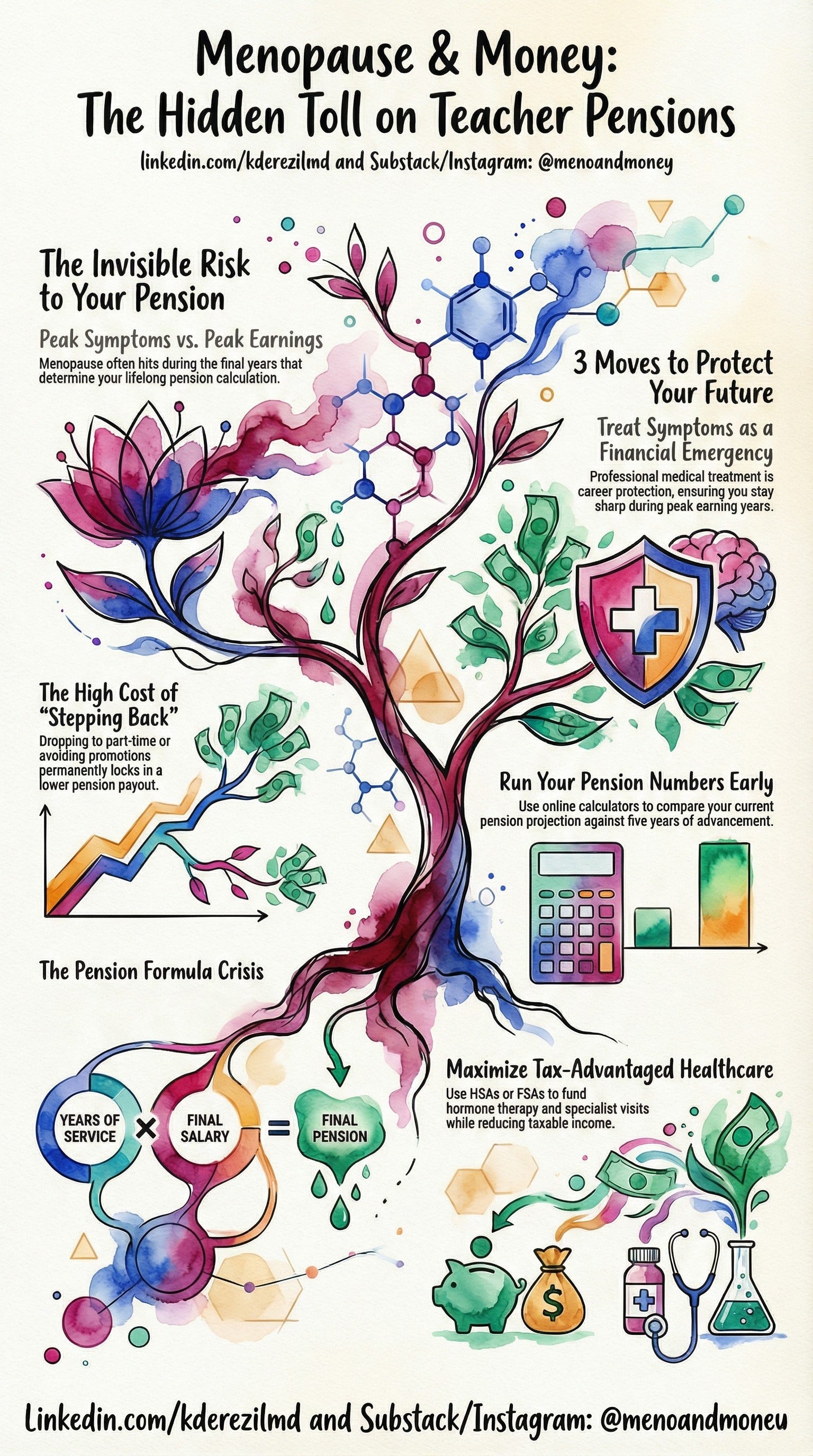
3. Build a healthcare account while you’re still earning. If your district offers an HSA or FSA, maximize it. Menopause-related care — specialist visits, hormone therapy, mental health support — qualifies. These accounts reduce your taxable income while creating a funded runway for treatment costs.
You’ve built something real. Don’t let untreated symptoms quietly undo it.
Share this with a teacher in your life who keeps saying, “I just don’t feel like myself anymore.” She needs to see this.