


Menopause is the time in a woman’s life when her period stops for good. It comes with real symptoms — hot flashes, brain fog, poor sleep, and mood changes. But for Black women, menopause lasts longer, hits harder, and costs more. And almost nobody is talking about what it does to their money.
In this article:
Why Black women’s menopause lasts 3.5 years longer than white women
How health costs quietly drain money every single month
The one quiet career decision that can cost hundreds of thousands of dollars
It Starts Earlier and Lasts Longer
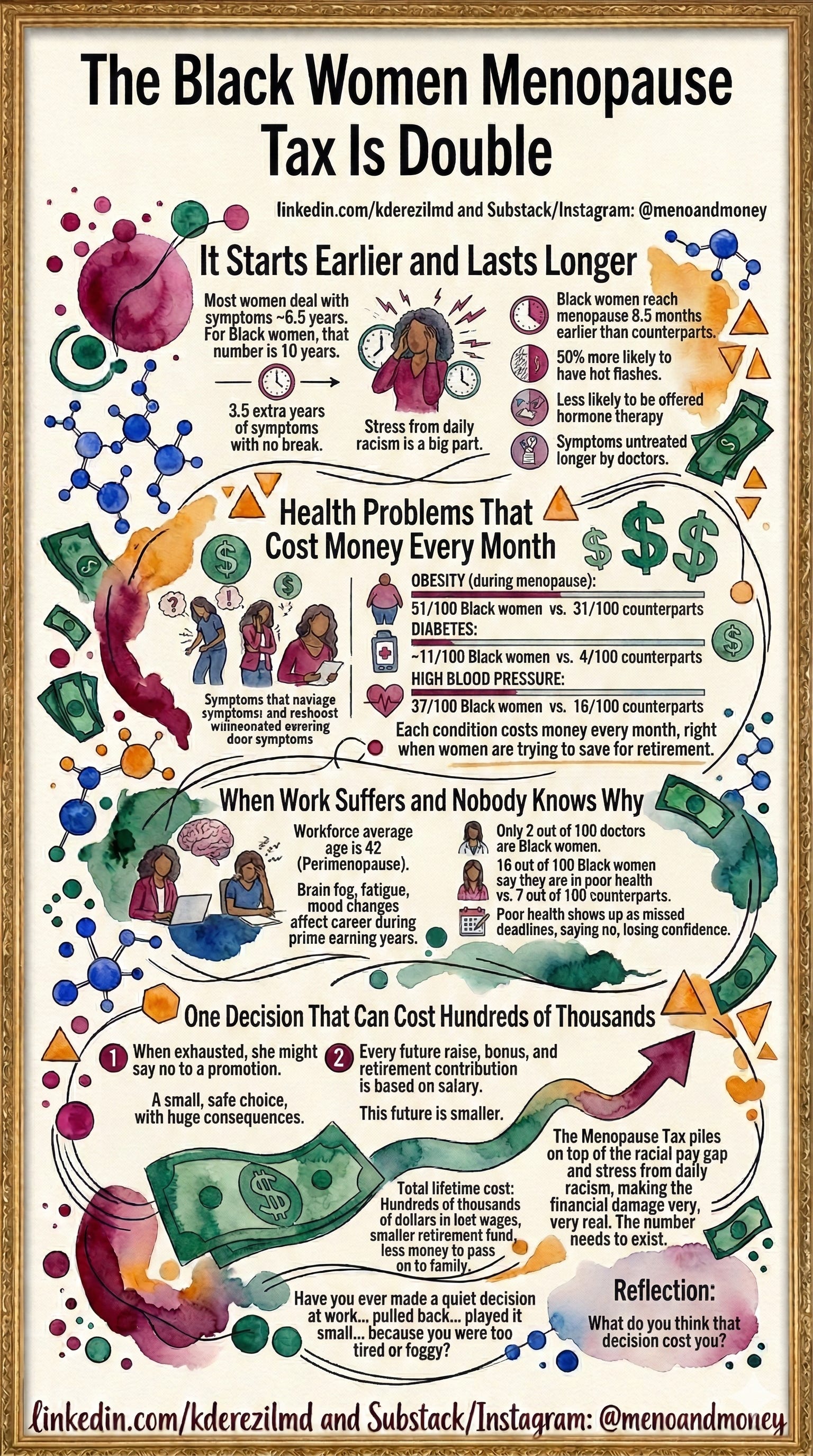
Most women deal with menopause symptoms for about 6 and a half years. For Black women, that number is 10 years. That is 3 and a half extra years of hot flashes, sleepless nights, and brain fog — with no break.

Why does this happen? A big part of the reason is stress. Living with racism every day puts extra strain on the body. That stress speeds up hormonal changes and makes symptoms worse. It is not a personal problem — it is what happens when the body carries that kind of weight for years and years.
Here is what the numbers show:
Black women reach menopause 8.5 months earlier
Black women are 50% more likely to have hot flashes
Black women are less likely to be offered hormone therapy by their doctor
Many doctors do not take their symptoms seriously, so the suffering goes untreated longer
Health Problems That Cost Money Every Month
Menopause makes the body change in ways that can lead to new health problems. For Black women, those problems are much more common — not because of personal choices, but because of years of stress and not getting the same level of care.

These health conditions mean more doctor visits, more medicine, and more money going out every month:
51 out of 100 Black women have obesity during menopause
About 11 out of 100 Black women have diabetes
37 out of 100 Black women have high blood pressure
Each one of those conditions costs money every single month. Put them together, and it can be thousands of dollars a year — right when many women are trying to save for retirement.
When Work Suffers and Nobody Knows Why
The average woman in the workforce is 42 years old. That is right in the middle of perimenopause — the years before menopause when symptoms are already starting. Brain fog makes it hard to focus. Fatigue makes it hard to show up fully. Mood changes can affect how others see you at work.
This is happening during the most important years of a woman’s career — the years when she should be earning the most money, getting promoted, and building her retirement savings.
For Black women, it is even harder:
Only 2 out of 100 doctors are Black women — so most patients never see a doctor who understands their experience
16 out of 100 Black women say they are in poor health
Poor health shows up at work as missed deadlines, saying no to big projects, and slowly losing confidence
One Decision That Can Cost Hundreds of Thousands
Here is the part that is hardest to talk about.
When a woman is exhausted and foggy and just trying to get through the day, she might say no to a promotion. It feels like a small, safe choice in the moment. But that one decision can change everything that comes after it.
Every raise, bonus, and retirement contribution from that point forward is based on her salary. If she never took that higher-paying job, all of those future numbers stay smaller — for the rest of her career.
The total lifetime cost can be:
Hundreds of thousands of dollars in lost wages
A smaller retirement fund
Less money to invest, save, or pass on to family
Black women already earn less than white women because of the racial pay gap. The menopause tax does not land on even ground — it piles on top of a gap that already exists. Add the energy spent navigating racism at work on top of untreated symptoms, and the financial damage becomes very, very real.
Nobody has put an exact number on what 3.5 extra years of hard, untreated symptoms costs a Black woman’s career. That number needs to exist.
That is exactly why this conversation cannot wait.
Reflection: Have you ever made a quiet decision at work — said no to something, pulled back, or played it small — because you were just too tired or foggy to push through? What do you think that decision cost you?