


Women are hunting for medication they depend on. This isn’t a supply chain footnote. It’s a health and financial disruption — and it was predictable.
What’s Happening
Women across the country are calling multiple pharmacies, driving across town, and hearing the same three words: “out of stock.” Estradiol patches — worn on the skin to deliver estrogen transdermally — are in short supply. Patients are being switched between brands mid-treatment, or paying hundreds out-of-pocket for brand-name alternatives insurance won’t cover. Some are going without.
When that happens, symptoms return fast: hot flashes, night sweats, insomnia, brain fog, mood disruption. For women who are working, leading, and making high-stakes decisions, this is not a minor setback.
Three Reasons This Is Happening Now
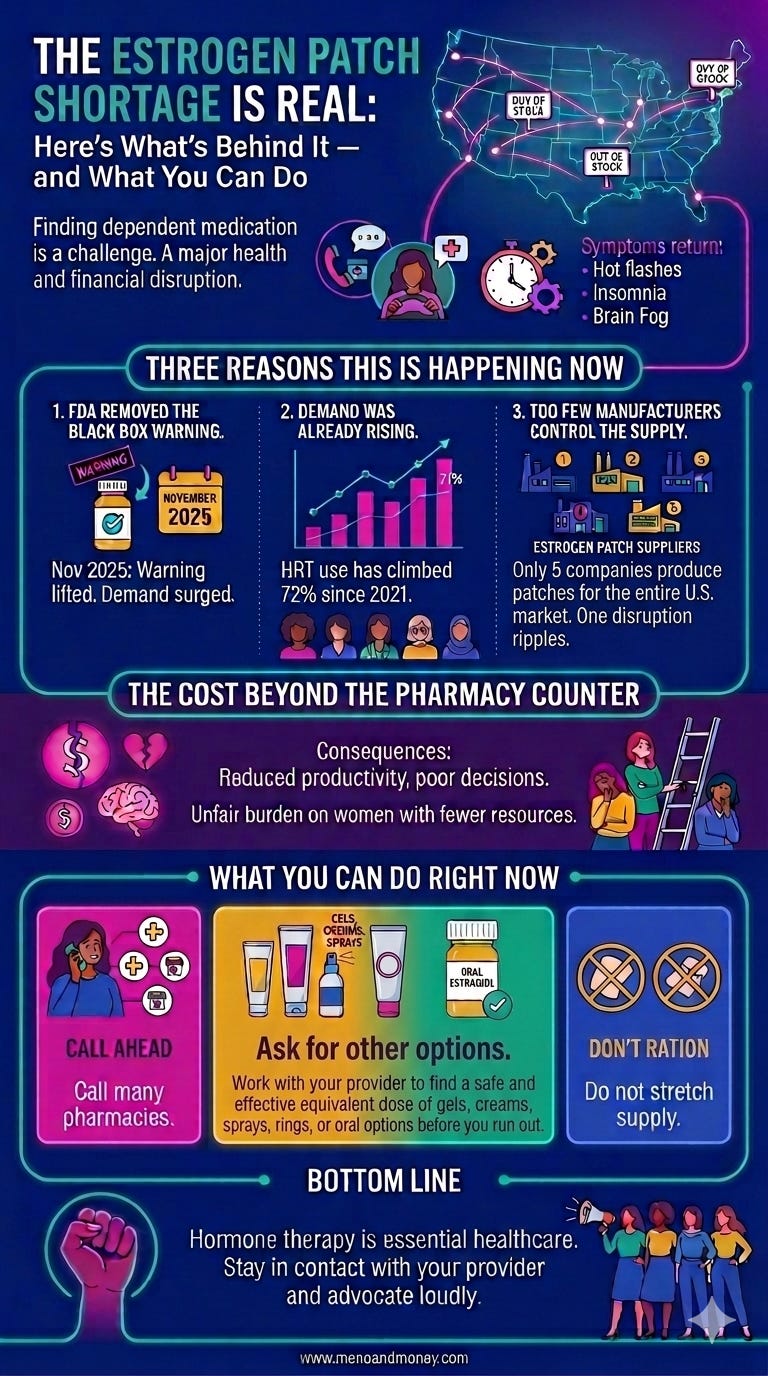
The FDA removed the black box warning. In November 2025, a 20-year warning was lifted from menopausal hormone therapy products. Prescriptions surged overnight.
Demand was already rising. HRT use has climbed 72% since 2021. The estradiol patch market grew 14% in 2024 alone. Supply never caught up.
Too few manufacturers control the supply. Only five companies produce estrogen patches for the U.S. market. One disruption ripples nationally. There is almost no buffer.
“The question isn’t whether prescriptions increased. The question is why the system wasn’t prepared for the possibility that they would.”
The Cost Beyond the Pharmacy Counter
This shortage has a financial cost that rarely gets named. When symptoms return — brain fog, sleep loss, mood disruption — so do the downstream consequences: reduced productivity, poor decisions, stalled careers. Add out-of-pocket costs for brand-name alternatives, and this becomes a compounding financial hit on top of a hormonal one. The shortage doesn’t affect everyone equally. Women with fewer resources bear the most.
What You Can Do Right Now
Call ahead — and call widely. Don’t wait until you’re out. Independent pharmacies and licensed online pharmacies are often better stocked than large chains.
Ask about other options. Estrogen gels, creams, and sprays contain the same active ingredient — estradiol — delivered the same way. For women without a clotting history, oral estrogen is safe and effective — and often better covered by insurance. Your provider can calculate an equivalent dose.
Don’t ration. Stretching your supply by using patches less often is not a safe workaround. Work with your provider to find an alternative before you run out.
The Bottom Line
Menopause affects half the population. Hormone therapy is not a lifestyle preference — it is evidence-based medicine for a universal biological transition. The supply chain wasn’t ready because women’s healthcare rarely is. Stay in contact with your provider, know your alternatives, and advocate loudly. You should not have to drive across town to access essential care.