

Have you had a day lately when you looked at your job and thought, “I can’t do this anymore”?
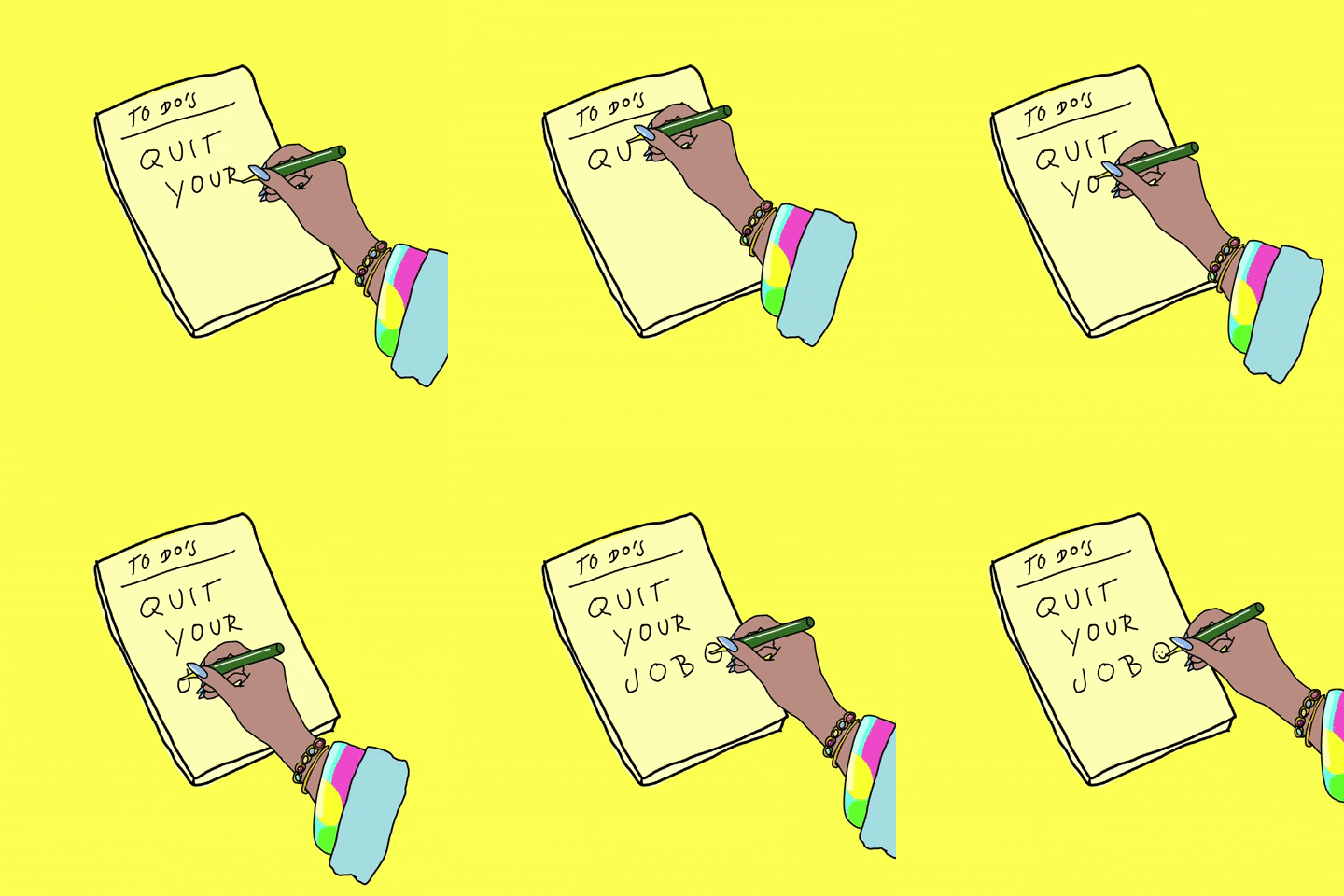
If you’re in your 40s or 50s, you are not alone. And a new study says something that might change how you see that feeling.
Researchers asked more than 1,600 working women, ages 45 to 60, about their health and their jobs. They wanted to know who was thinking about quitting. The answer was not hot flashes. It was not aches and pains.
It was mood. Feeling anxious. Feeling cranky. Feeling sad. Feeling worn out in your body and your mind. Those feelings had the strongest link to wanting to leave work.
YOU CAN’T SEE THE SYMPTOMS THAT HURT THE MOST
And that’s why nobody talks about them
Think about a hot flash. Everyone can see it. You can fan yourself. Someone might even bring you a glass of water.
Now think about feeling anxious in a meeting. Or snapping at a coworker you like. Or feeling so tired that sleep doesn’t help.
Nobody sees that. So nobody helps. And most of us don’t say a word, because we don’t want anyone to think we can’t handle it.
I want you to hear this: Needing help does not mean you are weak. It means you are human.
WHAT THE STUDY FOUND
Dr. Mariko Ogawa and her team at Fukushima Medical University in Japan shared this work at the 2026 Menopause Society meeting.
The women answered questions about 11 symptoms. The symptoms were in three groups: body symptoms, mood symptoms, and bladder and sexual health symptoms. They also answered questions about whether they wanted to leave their jobs.
Here is what stood out:

Mood symptoms had the strongest link to wanting to quit.
Body symptoms, bladder and sexual health symptoms, and taking care of family members stopped standing out once mood was counted.
Women who were married, and women with lower incomes, were less likely to want to leave. The researchers think money may be part of it. Some women simply can’t afford to walk away.
NOW, THE HONEST PART
I always want you to know what a study can and can’t tell us.
This was shared at a conference. It has not been published in a journal yet. The women lived in Japan, so American women may be different. It was a snapshot in time, so it shows a link. It can’t prove one thing causes another. And “wanting to quit” is not the same as quitting. The news reports I found also did not say how big the link was.
But here is what I know from my patients. When a woman feels this way, she rarely says, “My mood is off.” She says, “I hate my job.” And then she makes a big decision.
WHY THIS IS ABOUT MONEY, TOO
Here is a story I see all the time. I’ll call her Renee. She is 48 and runs a busy team. She’s tired all the time. She’s anxious. She’s crying in her car before work. She tells me she’s done. She wants to quit.
But Renee has not told anyone how she feels. Not her boss. Not her doctor. Not even her husband.
Quitting is a big step. Some steps are hard to take back like taking Social Security.
Now here is the part that gives me hope. This time of life is a window when mood troubles are more likely, even for women who never had them before. And those troubles can be treated.
If you quit before you get help, you pay twice. You lose the paycheck. And you still have the symptoms. That is The Menopause Tax™.
ONE STEP BEFORE YOU DECIDE
Don’t decide on your hardest day. Decide on a better one.
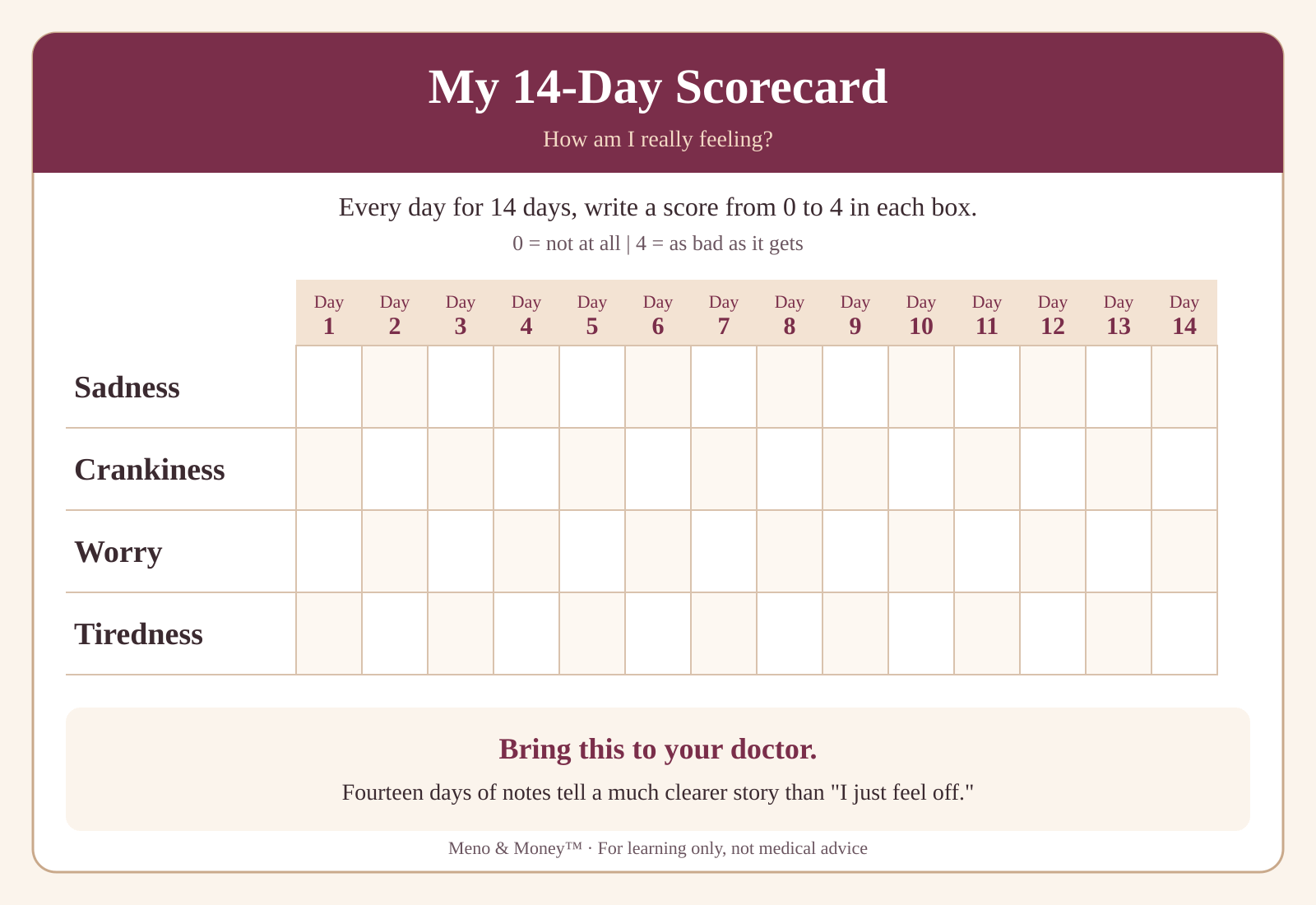
Every day for 14 days, give yourself a score from 0 to 4 on four things: sadness, crankiness, worry and tiredness. Write each score in its box on your scorecard. Bring the filled-in card to your doctor. Fourteen days of notes tell a much clearer story than “I just feel off.”
YOUR FEELINGS ARE TRYING TO TELL YOU SOMETHING
Wanting to quit might mean you need a new job. It might also mean your body is asking for help.
Please don’t ignore that. Listen to it. Get curious about it. Then ask for what you need.
Have you ever wanted to quit during this stage of life? Hit reply and tell me. I read every message.
You deserve a decision you feel good about, not just one you made in a hard moment.
Dr. Kimberly Derezil is the founder of Meno & Money™ and holds MD, WMCP®, and Menopause Society Certified Practitioner credentials. This post is for learning. It is not medical or financial advice.