


It’s 11 PM and you’ve got seven Amazon tabs open. Ashwagandha for cortisol. Lion’s mane for memory. Magnesium glycinate—the good kind. Your cart’s at $380. You close the laptop without ordering because you can’t remember if you already bought the magnesium last month.
Here’s the tension: menopause has become a market. And while you’re researching solutions for brain fog, night sweats, and weight gain, you might be spending thousands on symptoms—without ever treating the hormonal shift causing them.
THE REFRAME
Here’s what nobody’s saying out loud: wellness culture has figured out how to monetize your symptoms while keeping you just functional enough to keep buying.
Medical treatment would eliminate the need for most of what’s in your cart.
This isn’t about whether supplements work. It’s about recognizing when symptom-chasing becomes expensive avoidance of the root cause.
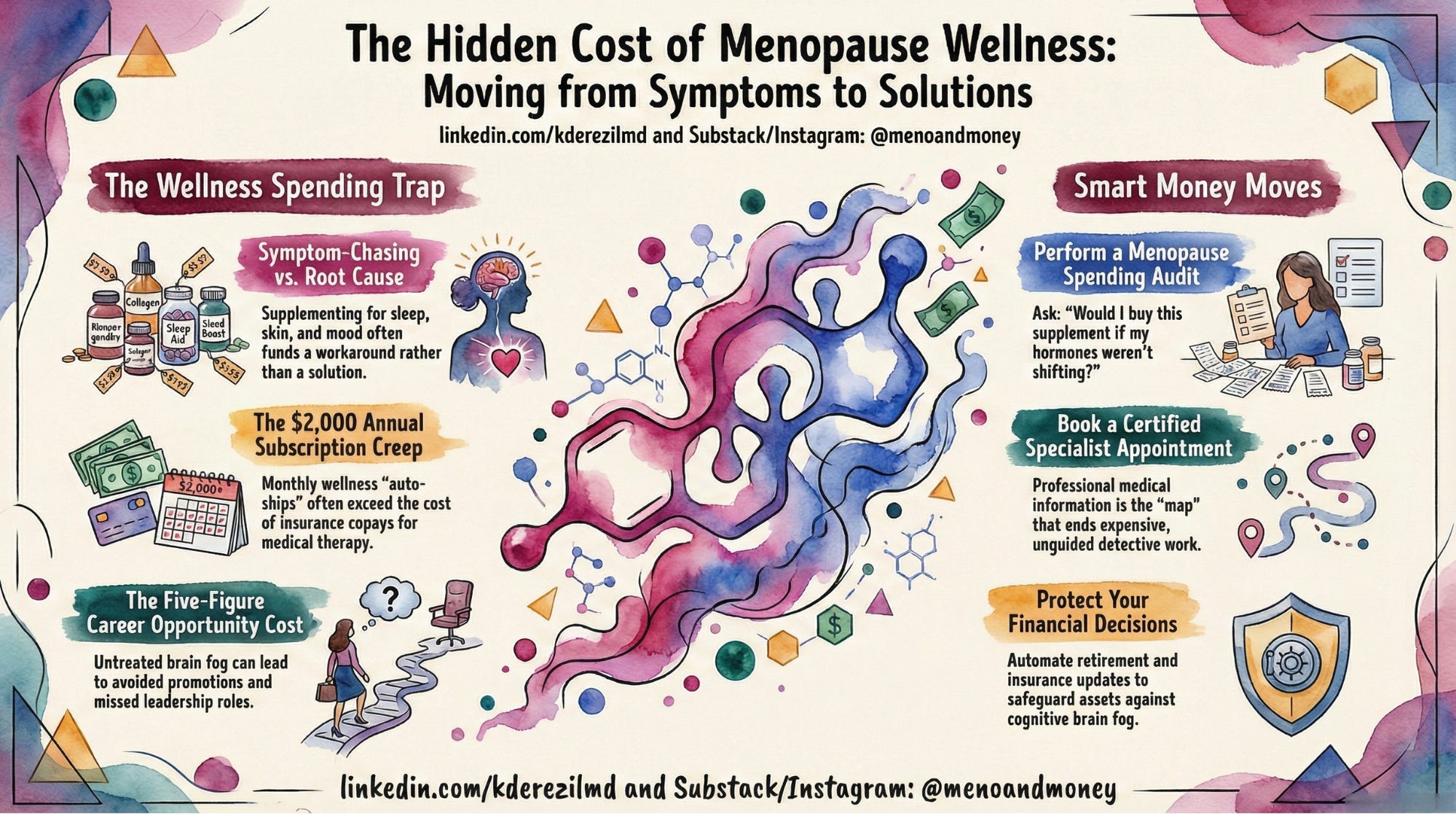
Magnesium for sleep. Collagen for skin. Ashwagandha for mood. Probiotics for bloat. Each purchase feels small, defensible, self-care. But when you’re spending $200–$500 monthly on products that treat downstream effects of estrogen loss, you’re funding a workaround—not a solution.

Meanwhile, the one conversation that could reduce or eliminate multiple symptoms—medical therapy with a menopause specialist—gets delayed. Because it feels medical, complicated, or like admitting something’s wrong.
THE MONEY CONNECTION
The wellness spending trap works in three ways:
Subscription creep you can’t track. $47 for adaptogens. $89 auto-ship collagen. $29 hormone app. It’s $165 monthly before you count the one-off purchases. In a year, that’s nearly $2,000—more than most insurance copays for actual hormone therapy.
Delayed treatment compounds risk. Untreated estrogen loss doesn’t pause. Bone density drops 1-2% yearly after menopause starts. Cardiovascular changes begin. Cognitive shifts get harder to reverse. The supplement can’t stop what’s happening—and later treatment gets more expensive.

The career cost nobody’s counting. Brain fog isn’t just inconvenient. It’s the promotion conversation you avoided, the client you didn’t pitch, the leadership role you turned down because you “couldn’t handle more right now.” That’s not a $89 nootropic problem. That’s a five-figure opportunity cost.
SMART MONEY MOVES
1. Audit the question: “Would I need this if my hormones weren’t shifting?”
Look at your last three months of wellness spending. If the answer is “probably not,” that’s menopause cost in disguise. You’re not wrong for buying it—but you deserve to know what you’re actually paying for.
2. Book the specialist appointment now, decide later.
Get on the calendar with a Menopause Society-certified menopause provider. You don’t have to start treatment, but you need the information. Most insurance covers the visit. Compare that cost to your monthly supplement total.
3. Automate one financial protection move this week.
Check your retirement account beneficiaries. Confirm your life insurance is current. If brain fog is real, protect decisions you’ve already made. This takes ten minutes and costs nothing.
THE LINE WORTH SAVING
Treating symptoms one by one isn’t self-care—it’s expensive detective work you’re doing without the map.
Reply with one number: how much did you spend on supplements/wellness last month?
Send this to the friend whose bathroom cabinet looks like a Whole Foods vitamin aisle.