


More than 70% of women develop musculoskeletal symptoms during the menopause transition, and about 25% are disabled by them. Hormone therapy handles hot flashes, night sweats, and bone loss. Aching joints and flattened energy are less predictable, and plenty of women stay symptomatic on a full regimen.
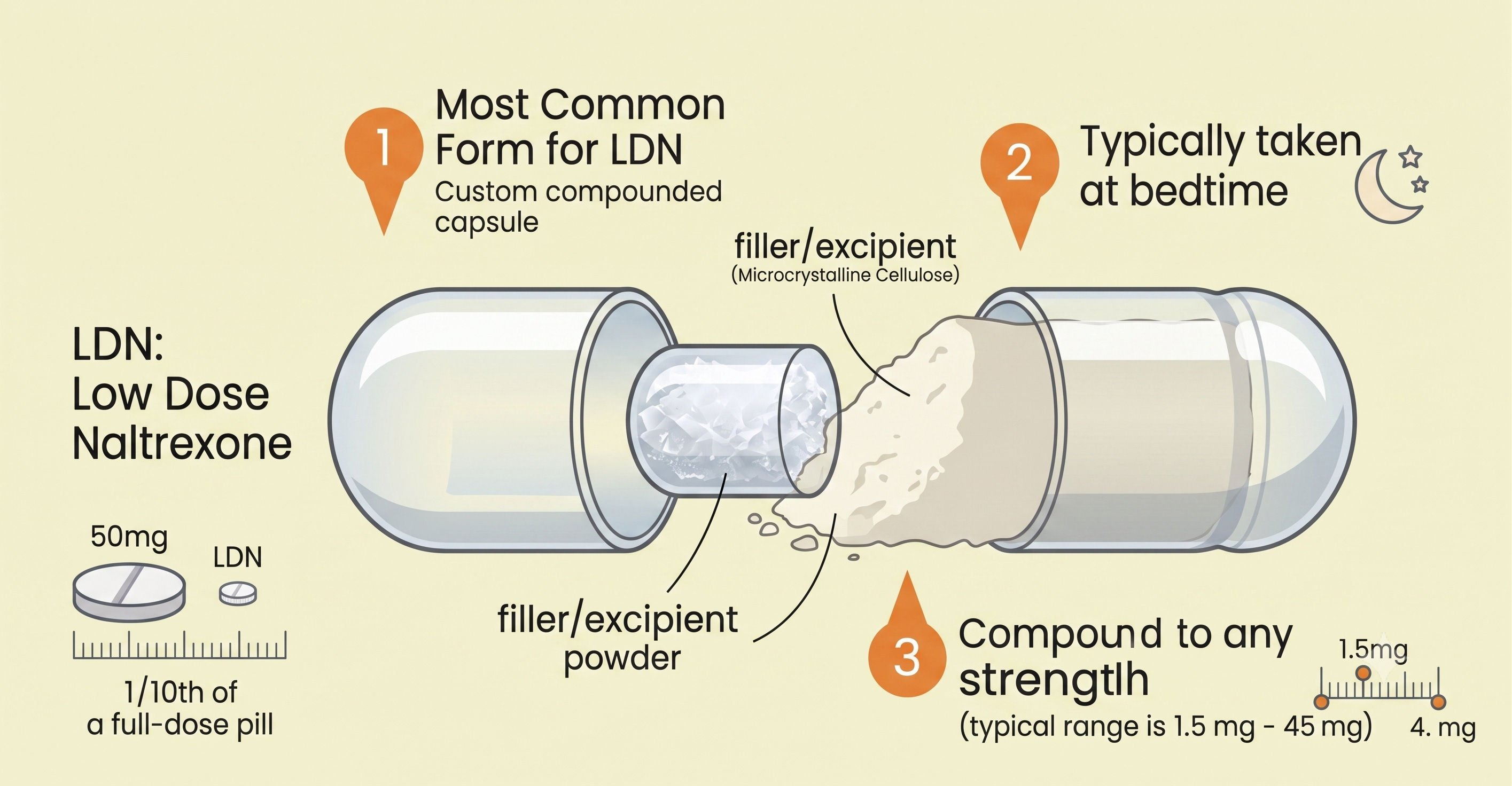
Low-dose naltrexone is what turns up when they go looking for what comes next. Naltrexone blocks opioid receptors, and the FDA approved it in 1984 at 50 mg for opioid and alcohol use disorder. LDN means 0.5 to 6 mg daily, roughly a tenth of that dose. No manufacturer makes a tablet that small, so a compounding pharmacy prepares it.
NOBODY HAS STUDIED THIS IN MENOPAUSE
A 2026 review in Advances in Therapy collected 105 LDN studies published since 1989, spanning seven therapeutic areas. Menopause was not one of them. The trial registry says the same thing: work underway in fibromyalgia, endometriosis, long COVID, POTS, and chronic fatigue, and nothing in perimenopausal or postmenopausal women.
No trial has tested LDN against estrogen-related joint pain in any form. That includes aromatase inhibitor arthralgia, the joint pain that appears when breast cancer treatment deliberately suppresses estrogen, which is the closest thing medicine has to a controlled model of what happens at menopause.
Every recommendation you encounter is borrowed. The useful question is what it was borrowed from.
WHAT THE ADJACENT RESEARCH SHOWS
Joint pain. This is the main reason midlife women try LDN, and it is where the borrowed evidence is weakest. A randomized crossover trial in osteoarthritis and inflammatory arthritis found no benefit over placebo. In fibromyalgia, the two positive studies enrolled 10 and 31 patients. The three larger ones, at 52, 86, and 99 patients, all failed to beat placebo.
Fatigue. A retrospective review of 218 chronic fatigue patients found 73.9% reported some improvement, with nothing controlled and no placebo group. A small Gulf War illness trial classified 38% of participants as responders. Neither population was menopausal.
Brain fog. Here there is one real signal. The 99-patient fibromyalgia trial missed its pain target but pointed toward fewer memory complaints, and the authors asked for that to be studied directly. Nobody has yet.

Pelvic and vulvar pain. A 2025 case series described improvement in vulvodynia, and a trial in endometriosis pain is running now.
TWO THINGS SPECIFIC TO MIDLIFE
Insomnia and vivid dreams sit near the top of the reported LDN side effects. Sleep is the symptom menopausal women most want back, and a drug that disturbs it starts at a disadvantage in this population.
LDN also does nothing about estrogen. It will not protect bone and it will not treat genitourinary symptoms. Using it in place of hormone therapy leaves the underlying change untreated.
WHAT IT COSTS
Compounded LDN runs $30 to $60 a month, roughly $600 a year. Insurance almost universally denies it, and prior authorization for off-label naltrexone is routinely rejected. Telehealth visits add $75 to $200.
It does qualify as a prescription medical expense under IRS Publication 502, so an HSA or FSA covers it. Keep the pharmacy receipt and the prescription record.
One cost is not financial. LDN blocks opioid receptors even at 4.5 mg, so starting it during daily opioid therapy can trigger withdrawal, and it needs to stop 24 to 72 hours before surgery requiring opioid pain relief. Midlife is a common decade for joint replacement.
WHERE THIS LEAVES THINGS
For a menopausal woman with aching joints, the honest summary runs like this. Plausible mechanism. Tolerable safety record. Fifty dollars a month. No evidence in anyone resembling her, and negative results in the larger trials of the closest comparison group.
Some women will try it anyway, and that can be a reasonable choice. It is worth knowing which parts are established and which parts are inference before the first prescription rather than after the twelfth refill.
Sources: Gouda AHK, et al. Adv Ther. 2026;43:2852-2870. | Wright VJ, et al. Climacteric. 2024;27(5):466-472. | Due Bruun K, et al. Lancet Rheumatol. 2024;6(1):e31-e39. | Beaudette-Zlatanova B, et al. Clin Ther. 2023;45:468-477. | Polo O, et al. Fatigue. 2019;7:207-217. | IRS Publication 502 (2025).
105 LDN studies reviewed and none of them included menopause is a stark number to see stated plainly. At $30 to 60 a month with insurance almost never covering it, patients are essentially self-funding a trial the research hasn't run yet.