


If you’re in your 40s or 50s, here’s a scenario you may recognize:
You start turning down opportunities.
You choose the “less intense” role.
You stop raising your hand for projects you used to crush.
You quietly downgrade your ambition because you physically and mentally can’t keep operating the way you always have.
From the outside, it looks like a lifestyle choice.
Inside? It feels more like:
“I’m trying not to fall apart.”

But new research shows what women are living every day:
Midlife women don’t slow down because they suddenly stop caring.
They slow down because the system was never designed to support women moving through the most biologically disruptive decade of their lives.
You’re not choosing less.
You’re surviving more.
THE FINANCIAL SQUEEZE YOU’RE TRAPPED IN
Your 40s and 50s should be your highest earning years — the decade where you’re finally reaping the rewards of experience, seniority, and leadership.
Instead, perimenopause hits right when you’re also:
Caring for aging parents
Supporting teens or college-aged kids
Managing the emotional load of your household
Trying to catch up on retirement after decades of caregiving interruptions
Now add brain fog, insomnia, anxiety spikes, and energy crashes — and suddenly the job that once felt effortless becomes a daily endurance test.
The research calls this “constraint-driven decision-making.”
Women call it:
“I’m trying to survive without losing my mind.”
Scaling back doesn’t happen because you lack ambition.
It happens because your body collapses right when life demands the most of you — and your workplace hasn’t caught up.
THE “CHOICE” THAT ISN’T A CHOICE
Studies show a hard truth:
Women often shift into safer, lower-stress, income-driven roles — not because they want to, but because structural barriers make anything else impossible.
Researchers found:
Women are pushed toward roles focused on income survival, not fulfillment
Ageism + gender bias make it harder for midlife women to adopt new professional identities
Responsibilities at home collide with declining workplace support
Women exit self-employment almost twice as often as men when caregiving demands spike


But when women do pursue new career paths later in life?
They outperform younger entrepreneurs.
They succeed at higher rates.
They thrive — but only when the environment supports them.
You’re not losing your ability.
You’re losing the conditions you need to succeed.
THE IDENTITY SHAKE-UP NO ONE WARNED YOU ABOUT
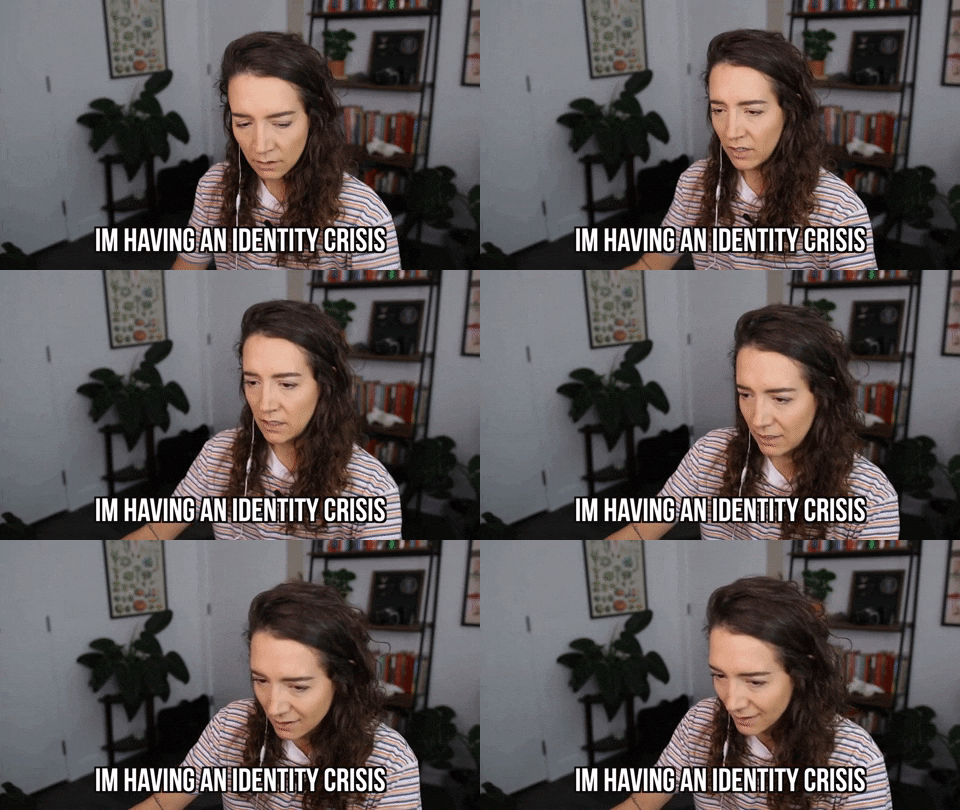
Menopause brings a cognitive shift that feels like an identity crisis:
“I used to be sharp. Reliable. The one everyone counted on.”
“I don’t recognize myself at work anymore.”
This isn’t a personal failure.
It’s a biological transition colliding with social expectations that women remain endlessly resilient and low-maintenance.
Men told me: “I just power through.”
Women told me: “Powering through is destroying me.”
The research backs this:
Women face both the performance impacts of menopause and the societal penalties for slowing down.
That’s not a character flaw.
That’s structural inequality.
WHAT THIS MEANS FOR YOUR NEXT MOVE
Here’s how to reclaim control in a system that doesn’t yet account for what you’re navigating.
1. Distinguish “what I want” from “what my symptoms are forcing”
Before making career decisions, ask:
What would I choose if my energy and brain function came back?
What do I want long-term vs. what feels tolerable today?
Decisions made in survival mode often shrink your future.
2. Explore “hybrid entrepreneurship”
The research suggests the most powerful career strategy for midlife women:
Keep your paycheck. Build something on the side.
Grow slowly. Transition later — on your terms.
This protects financial stability while reconnecting you to purpose.
3. Seek environments that address systemic issues, not just offer “flexibility”
You don’t need a yoga reimbursement.
You need:
Autonomy
Predictable workloads
Trauma-informed, menopause-literate leadership
Performance evaluations that account for life stage realities
THE REAL TRUTH
What looks like midlife women “choosing” smaller careers is often:
A lack of support
A lack of acknowledgment
A lack of structural safety
A body in transition
A system built around men’s biological timelines
And yet —
Women who get the right support at this stage often launch the most successful, profitable, and meaningful chapters of their career after menopause, not before.
You’re not done.
You’re just unsupported.
Drop this in the comments:
👉 What’s ONE career change you made in your 40s or 50s — and do you think it was a true choice or a survival move?
Your answer might be the permission another woman desperately needs.