


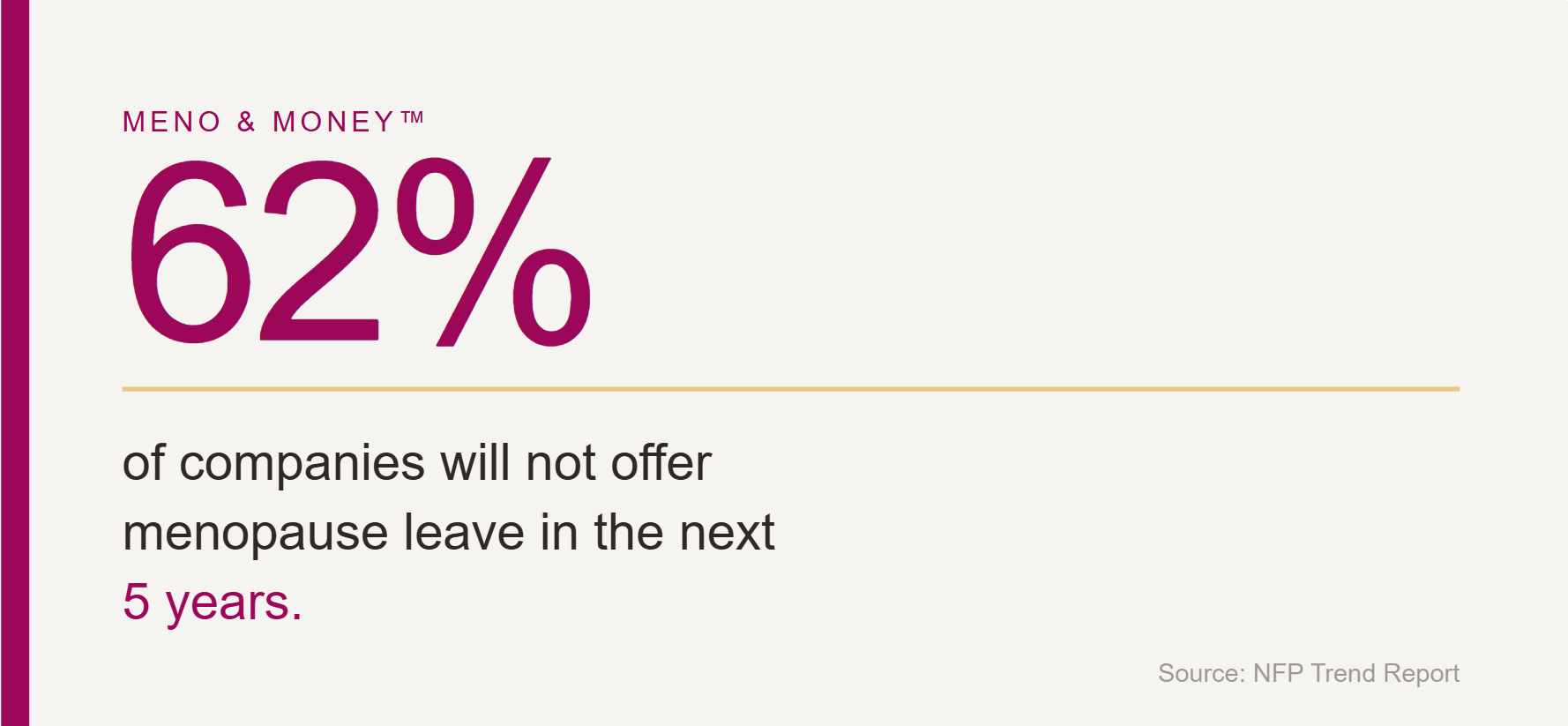
6 out of 10 companies say they will not offer menopause leave in the next five years.
That’s not an oversight. That’s a decision.
And if you’ve ever shown up to work in a cold-sweat haze, running on three hours of sleep, wondering why nobody in HR seems to notice — you deserve to know exactly why that decision was made, and what it’s costing you.
YOUR EMPLOYER KNOWS. THEY CHOSE SOMETHING ELSE.
And that choice was never made with you in the room.
Here’s what the benefits consulting data actually shows: demand for menopause workplace support is going up. Fast. Women in their 40s and 50s are the fastest-growing segment of the workforce. Perimenopause typically starts between 40 and 44. That math is not complicated.
What’s complicated is what happens when HR sits down to figure out what to do about it.
I want to walk you through exactly why three out of five companies are sitting on their hands — because understanding the resistance tells you everything about what you need to do next.
REASON #1: HR IS ALREADY DROWNING
Corporate HR departments are not under-resourced because nobody cares. They’re under-resourced because every single benefit category has a compliance trail, a tracking system, a verification protocol, and a lawyer reviewing it before it goes live.

When a benefits leader looks at a proposal for “menopause leave,” here’s what they see: a new legal definition they don’t have yet, a medical verification process they’d have to build from scratch, a tracking system that doesn’t exist in their current software, and a compliance question that opens the door to every other employee who wants a condition-specific leave category.
Their answer is almost always: no. Bundle it under existing frameworks instead. Short-Term Disability. FMLA. General PTO.
Which sounds reasonable until you realize that those frameworks were not built for episodic symptoms. Night sweats don’t come with a diagnosis that meets STD criteria. Brain fog doesn’t qualify you for FMLA. Taking a personal day every time your sleep was destroyed is not a sustainable strategy — and your manager notices the pattern before your HR rep ever does.
The administrative friction is real. But the burden of that friction lands entirely on you.
REASON #2: THEY’RE AFRAID A POLICY WILL BACKFIRE
This one will make you angry.

Some HR and executive teams are avoiding menopause leave policies because they’re worried the policy will harm the women it’s supposed to protect.
The argument goes like this: if we create a menopause leave category, hiring managers will start seeing women in their 40s and 50s as a flight risk. A woman who might need significant accommodations. A promotion candidate who could suddenly go quiet for a month. The fear is that naming the benefit creates a bias that didn’t exist before — or amplifies one that was already there.
They call this the “Mommy Track” parallel, and they’re not entirely wrong that it’s a risk.
But here’s what they’re leaving out: the bias is already there. Women in perimenopause are already being passed over, already stepping back, already declining opportunities they’re qualified for because their symptoms are unmanaged and their workplace has nothing to offer them. The absence of a policy doesn’t protect you from discrimination. It just makes the discrimination invisible.
The second piece of this argument is what I call the Utilization Paradox. Companies say: women in their peak earning years won’t use this benefit anyway. They’re too worried about signaling vulnerability. So why build it?
And they’re right that utilization would be low at first. Women in their 40s and 50s have spent careers learning to perform capacity they don’t always feel. They are not going to raise their hands and declare a private biological transition to their boss in year one of a new policy.
But low utilization in year one is not an argument against building the benefit. It’s an argument for building the psychological safety alongside it.
REASON #3: FLEXIBILITY IS CHEAPER THAN LEAVE
When companies do decide to act, most of them are not writing new leave policies. They’re adjusting workplace conditions instead.

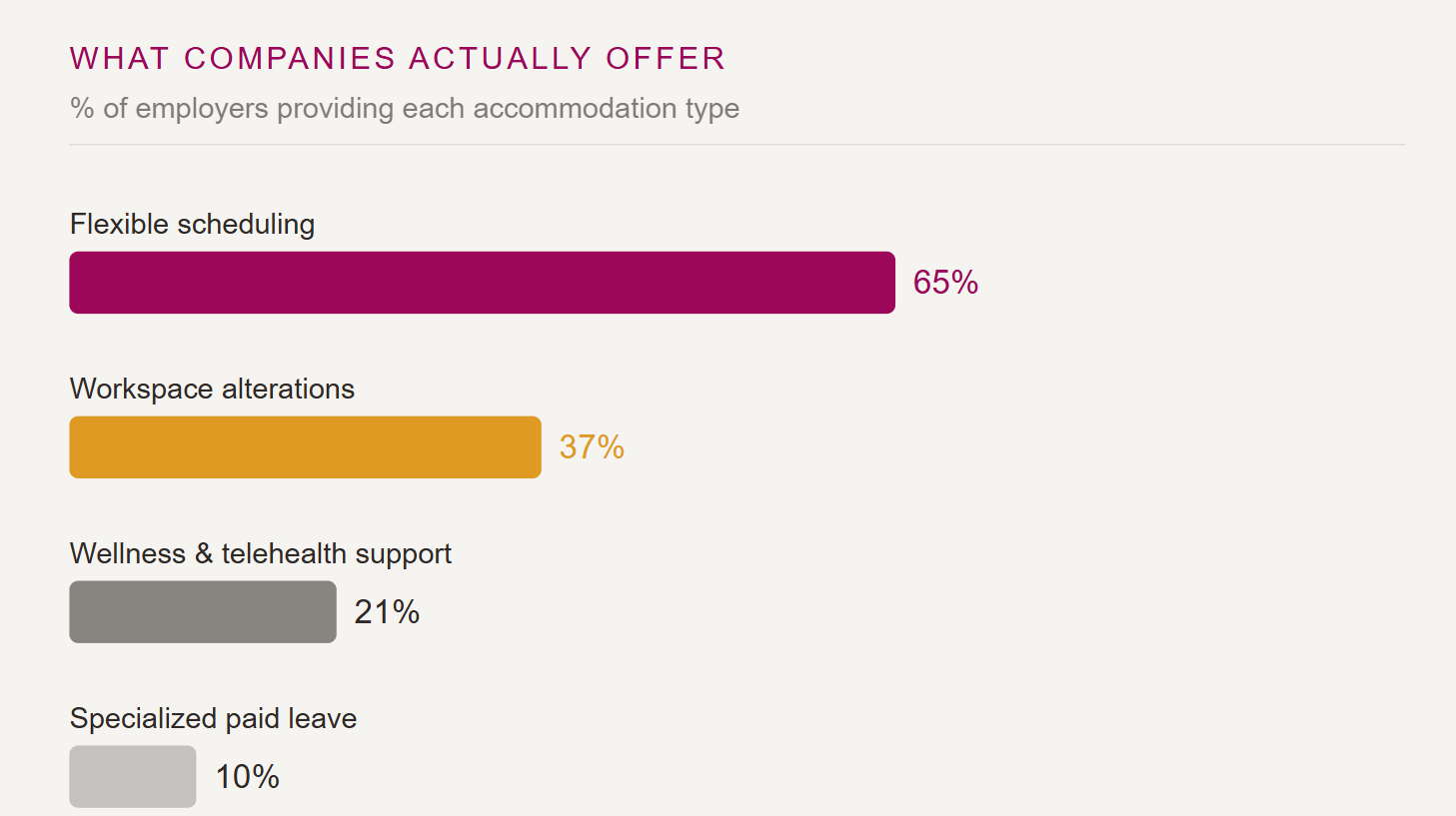
The NFP Trend Report data breaks this down clearly:
65% of companies now allow flexible scheduling when symptoms are affecting work
37% offer some form of workspace alteration — a desktop fan, a desk near a window, temperature control access
21% provide wellness or telehealth support that covers menopause
10% provide any form of explicit extra paid time off
Read that last number again. One in ten.
From a CFO’s perspective, this makes sense. Letting someone log on two hours late after a night sweat destroyed their sleep is a low-cost fix for an immediate productivity problem. No paperwork. No legal review. No precedent.
From your perspective, it means you’re expected to make it work — through symptoms, on your own time, with a flexible schedule that still has the same deadlines attached to it.
Flexibility without financial protection is not a benefit. It’s a workaround.
HERE’S WHERE THIS IS HEADED
The voluntary hesitation from corporate America is about to collide with legal mandates that were not there five years ago.
Rhode Island now requires employers to provide reasonable accommodations for menopause. Philadelphia has reclassified menopause as a legally protected category. Washington State issued Executive Order 26-01 this year specifically addressing menopause workplace accommodations.
More states are watching. More cities are moving.
Companies that spend the next five years waiting are going to spend the five years after that scrambling to build compliant programs under regulatory pressure, without the goodwill of having built them voluntarily.
The women who work for those companies will have paid the price of that delay in career capital, earnings, and health outcomes that compounded while leadership was still deciding whether the problem was real.
The Menopause Tax™ does not wait for HR to catch up.
The policy gap is real. It is not going to close on your timeline. Build your strategy around the world as it is, not as it should be.